This past fall, the Renewable Thermal Collaborative (RTC) hosted two webinars: Real World Lessons in Thermal Decarbonization and Insights in Thermal Decarbonization for Apparel Manufacturers, featuring speakers from five Member companies from multiple sectors spanning chemicals, consumer goods, and food & beverage. Clear patterns emerged as these leaders shared their approaches to and challenges in their decarbonization pathways, which share similar principles.
Efficiency is Critical
Every speaker emphasized the same approach: energy efficiency is critical. As companies invest in heat pumps or explore alternative fuels, they are simultaneously capturing quick wins through efficiency audits and operational improvements. As one speaker noted, efficiency remains the foundation of any decarbonization program: it’s the greenest, most cost-effective approach available. These projects not only reduce emissions immediately, but also generate savings that can fund more ambitious transformations.
 Know Your Heat Before You Transform It
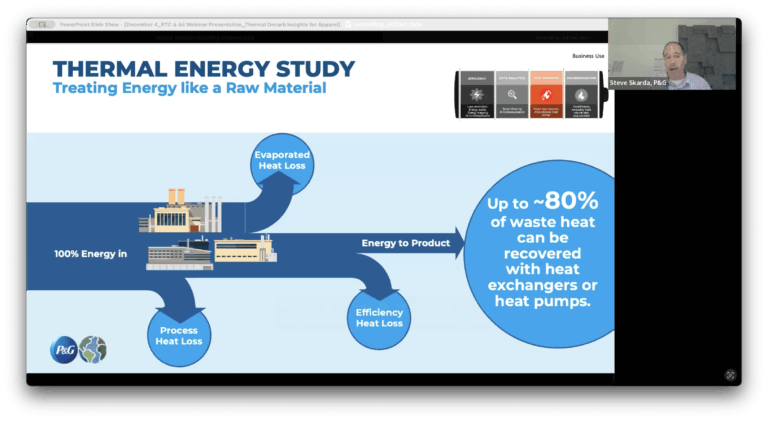
The importance of thermal mapping was another consistent insight shared across presentations. Multiple speakers described discovering that significant portions of their steam systems were simply producing hot water – an expensive and inefficient way to meet lower-temperature needs. This opens opportunities for “de-steaming,” converting processes under 95-100°C to hot water systems that are more compatible with heat pumps and other renewable thermal solutions. Understanding your actual heat profile, rather than relying on assumptions about heat demand, can transform what’s technically and economically feasible.
Progress Over Perfection
Rather than attempting wholesale facility transformations, successful organizations are taking incremental, site-specific approaches. They start with smaller loads, pilot new decarbonization technologies, and scale gradually. This measured strategy acknowledges the reality of working with legacy infrastructure – plants with thirty- to forty-year-old equipment designed when energy was cheap and sustainability may not have been a consideration. As one chemical industry leader pointed out, many processes were designed for high-temperature steam “from when it was pretty easy to light things on fire,” creating technical challenges that can’t be solved overnight.
 It Takes a Village
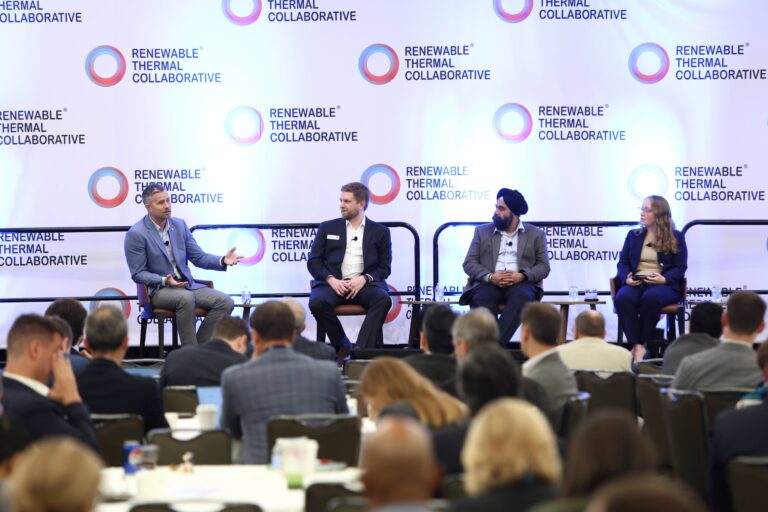
The critical importance of partnerships was perhaps the most consistent theme between the two webinars. Companies are actively collaborating with technology providers, engineering consultants, and peers to share lessons learned. One speaker shared that “collaborating and working together, with groups like the Renewable Thermal Collaborative, is how we are learning and how we are finding breakthroughs.” This partnership-focused mindset also extends to internal conversations; success requires buy-in from executives, engineers, and finance teams, each bringing different perspectives to the table.
Look Beyond the Energy Bill
Smart organizations are evaluating projects through multiple lenses beyond simple energy cost savings. They’re factoring in reduced maintenance, lower staffing requirements, productivity gains from decommissioning aging boilers, and how projects advance carbon reduction goals. This holistic value assessment helps make additional projects pencil that might not survive traditional payback calculations.
The Real Constraints
Two external challenges emerged repeatedly: financing limitations and grid capacity concerns. Even promising projects struggle without creative funding approaches, whether through state grants, federal programs, or innovative financial structures. Meanwhile, clean electricity supply and grid infrastructure constraints are already blocking some electrification projects, highlighting the need for coordinated planning with utilities.
The consistency of these themes across diverse industries suggests common principles rather than sector-specific issues. Organizations and companies just beginning their decarbonization journey can learn from these shared experiences, avoiding common pitfalls while accelerating progress through proven approaches.
The path forward may be complicated, but the RTC provides an ever-growing community of practitioners to engage with, all focused on common obstacles and opportunities in thermal decarbonization. Listen to the webinar recordings to hear more from these industry leaders, and become a Member of the RTC to accelerate your own thermal decarbonization journey.